
01
Enterprise Management System (ERP) Development
Full-scale ERP software for your business. Manage accounting, human resources, warehousing, and sales processes on a single platform.
Learn more →If ready-made software doesn't suit your business, you need to develop a system perfectly suited to your needs. Our custom software development services in Alanya offer customized solutions in all areas, from business management and e-commerce platforms to accounting systems and CRM applications. By working with us, you gain a scalable and secure software system tailored specifically to your business.
In addition to custom software development in Alanya, we also provide comprehensive digital solutions including web design, SEO optimization, digital marketing, and social media management. Each service is designed to be integrated and increase your business's online visibility and sales potential.
Full-scale ERP software for your business. Manage accounting, human resources, warehousing, and sales processes on a single platform.
Learn more →We connect your existing systems and automate data flow. We design and manage APIs that enable seamless communication with third-party applications.
Learn more →Designing and optimizing a custom database architecture to solve performance issues, ensure data security, and facilitate fast queries.
Learn more →Connect your existing systems. We offer custom API solutions that provide seamless data flow with third-party services.
Learn more →We offer professional design, performance tuning, and security solutions for the databases that form the backbone of your applications. In Alanya, we make data management fast and…
Learn more →Manage all departments of your business on a single platform. Control accounting, human resources, sales, and inventory tracking with an integrated system.
Learn more →Custom API solutions that connect your existing systems and integrate third-party services. Automate data flow and increase operational efficiency.
Learn more →We design secure, fast, and scalable database architectures for enterprise data management. We implement industry standards to ensure performance, security, and data integrity.
Learn more →We offer long-term maintenance, bug fixing, and technical support to ensure the continuity and security of the software we develop. Prevent system crashes; your data remains safe.
Learn more →We integrate your existing systems with new software. We ensure a seamless transition without data loss.
Learn more →Guides and current insights from the field.
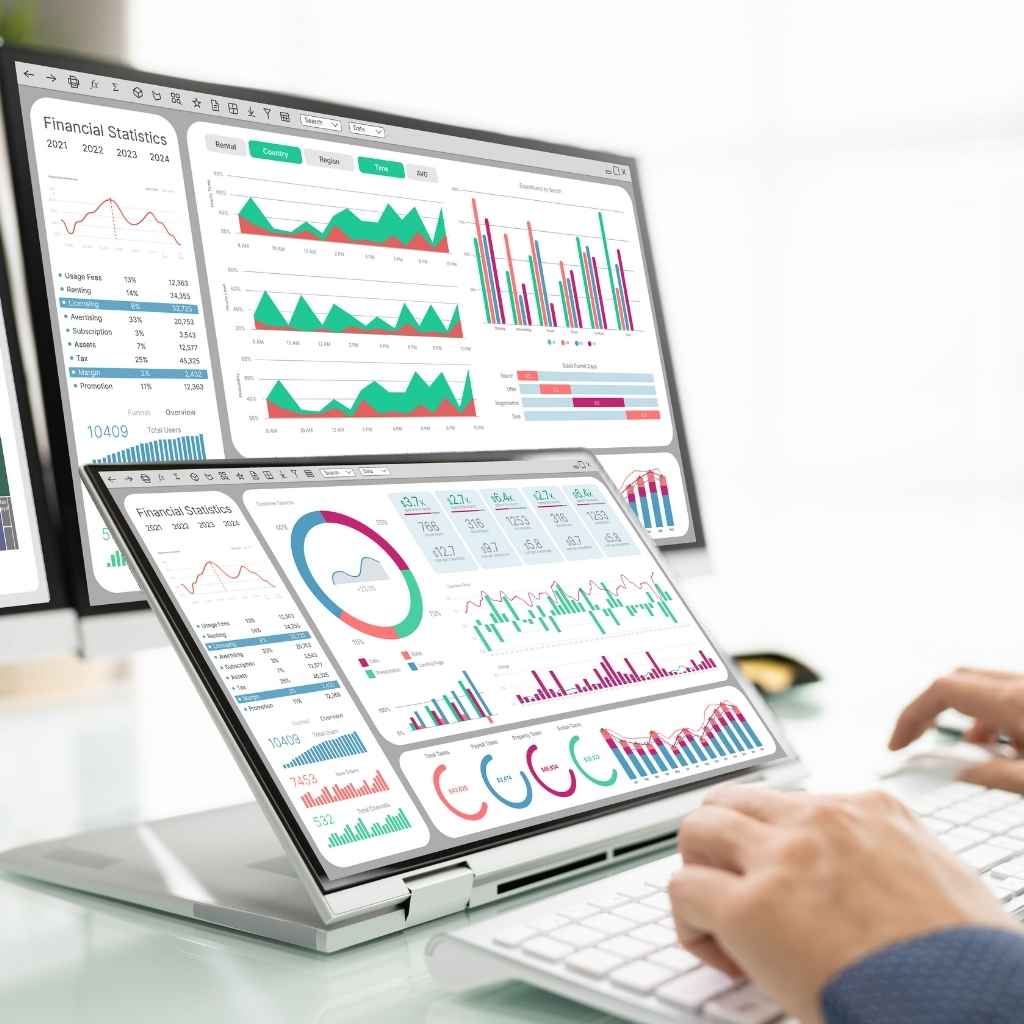
Why is a personnel tracking system important for clothing stores? The importance of a personnel tracking system in terms of efficiency…
Read more →
When setting up a personnel tracking system, how do you prepare for AI-powered searches? Efficiency strategies specifically for Alanya and…
Read more →
Learn the 6-step plan for a staff tracking system for car dealerships. Discover modern software solutions that will increase efficiency.
Read more →Custom software development means software coded exactly to meet your business's needs. Off-the-shelf solutions are generic tools designed for thousands of different businesses, often lacking essential features and critical functionality. Custom software, on the other hand, is precisely tailored to your business processes, customer structure, accounting system, warehouse management, or sales flow. A tourism business in Alanya, a manufacturing plant, a dermatologist's clinic, and a real estate agent all have completely different software needs; off-the-shelf software cannot address them all. Custom software is a solution that works exclusively for you, incorporates your rules, grows at your pace, and is entirely your property.
The timeframe varies depending on the complexity of the software, the number of required features, the size of the database, and integration requirements. A simple customer management system can be ready in 4-8 weeks, while a complex ERP system (finance, human resources, warehouse, sales, reporting) may take 4-6 months or longer. The first step is to analyze your needs in detail; this analysis may take 2-3 weeks. This is followed by the design, coding, testing, and training phases. Since businesses in the Alanya and Antalya regions generally request medium-sized projects, most are delivered within 8-16 weeks. If there is a rush, it is also possible to release a quick version focusing on a small number of features and then complete the additional features later.
Pricing is determined by the scope of the project, the number of developers, the duration, and the technology used. The range is from creating a single page to developing thousands of lines of code, database-connected software. Companies in Alanya and the Antalya region typically commission projects ranging from 20,000 to 500,000 TL. Several factors influence the price: integration with third-party services (banking, shipping, payment systems), mobile application requirements, support for a large number of users, security, and data reset features. It's important to prepare a detailed list of your project requirements to receive a price quote. The initial consultation is usually free; this will give you a clearer picture of the cost of your software.
You own the software entirely. You own the code, design, database structure, and all rights to the software, which was written specifically for you. Once released, the software cannot be sold to another company or given to another customer; it remains your property. Whether you are given or retain the source code is determined by your contract terms. Generally, the developer retains a copy of the source code for maintenance and updates, but the primary map and usage rights are entirely yours. Even after the developer's work is finished, you can continue to use the software yourself, have it updated by another developer, or add custom solutions if needed. Since the software will always run on your server or cloud system, you are not dependent on the developer in any way.
After software is released, you have two options regarding maintenance and updates. The first is to enter into a long-term maintenance contract with the software company; in this case, the developer will keep the software up-to-date by adapting to new versions of the operating system, patching security vulnerabilities, and improving speed. The second option is to have maintenance performed by another technical team with the assistance of the software company's consultants. Many businesses in Alanya and Antalya prefer long-term maintenance contracts because the developer has the best understanding of the software's internal workings. Maintenance costs are generally determined as an annual fee and vary depending on the size of the software. Annual maintenance costs are lower for smaller software applications and higher for larger or multi-user software applications. In case of an urgent problem (software crash, risk of data loss), intervention is usually provided within 24-48 hours.
The first step is to have the existing software inspected. The question is: Is the software running slowly? Is it stopping unexpectedly? Is there data loss? Or does it need new features added? If the software is completely broken or beyond repair, it may need to be rewritten from scratch; in this case, the working features of the old software are analyzed and built upon a more solid foundation. If the source code is available and understandable, repairs and improvements can be made to the existing software; this is usually cheaper and faster. It's important to know who owns the software and whether you have the source code; if not, you should request it from the original developer. Private software development companies in Alanya can often handle these kinds of "recovery" projects. How well the software will function depends on clearly diagnosing the source of the problem.
Testing is the most critical stage before deploying the software. The developer will verify that all features work according to the design. For example, dozens of scenarios are tested, such as whether you can delete customers after adding them, what happens to linked invoices when they are deleted, whether changing product prices affects past sales, and whether the figures in the reports are accurate. Businesses in the Alanya region frequently request that the software be tested with existing data (using real data); calling this "live testing" can be misleading because it hasn't yet been launched to customers. Load tests are conducted to see how the software behaves with 100 customers and how slow it is with 10,000 products. The testing process begins 2-3 weeks before the launch, and the live launch takes place after your approval. If errors are found during this testing phase, they are fixed and retested; this cycle continues until it is complete.
Yes, but this is a decision that needs to be made beforehand. If the software will run on a desktop browser (Chrome, Firefox, Edge), it can automatically run on a smartphone as well. This is called "responsive design"; the software adjusts itself to the screen size. If a sales representative, warehouse manager, or technician needs to use the software on their phone in the field, mobile-compatible software is essential. In Alanya tourism businesses, it would be very useful if guides could access the software in the field. However, in some cases, a full mobile application may be needed; for example, features such as offline operation, camera integration, and positioning are only possible in a mobile application. If you have a mobile application, separate development will be required for iPhone and Android, which is more expensive than the desktop version. The most sensible approach is to ensure that the desktop version of your software is mobile-compatible first, and then develop a full mobile application later if necessary.
If your software runs over the internet (cloud system), it becomes inaccessible when the internet connection is lost. However, an "offline" feature can be added; this allows the software to keep a copy of its database on your computer and run locally until the internet is restored. For example, if your sales representative has registered customers in the field and the internet is down, that data is stored on their computer and automatically synchronized to the server when the internet is back on. This feature may not be necessary in a region with high-speed internet like Alanya, but it is very useful if the customer service representative needs to work in remote areas of the field. The offline feature is slightly more expensive because it requires additional coding and data synchronization mechanisms. Alternatively, the mobile application of the software can be designed to run entirely on the phone, allowing you to process data on your phone even without internet; it synchronizes when the internet is restored. Which approach is right for you depends on your business's internet reliability and employee mobility.
Software is designed for a specific number of users during the development phase. For example, the answer to the question of whether 50, 500, or 5000 users will be working simultaneously determines the software's infrastructure. Small businesses in Alanya generally commission software for 10-50 users; medium-sized businesses for 50-200 users; and large businesses for 500+ users. More users mean more powerful servers, faster databases, and a more complex software architecture. If the software is initially designed for 50 users, it's possible to expand to 500 users later, but this requires additional development and server upgrades. The term "scalable software" means software that doesn't slow down as the number of users increases; this is possible if the developer creates a good architecture from the start. During software performance testing, the speed and stability of the software are tested at the maximum expected number of users. If you plan to increase the number of users in the future, you should tell the developer upfront because this will affect the software design.
Software security is a multi-layered protection. The first layer is user login; every user password is stored in encrypted form and passwords are never stored in plain text. The second layer is authorization control; cashiers, accounting managers, and owners can see and do different things. Rules such as cashiers cannot access fee definitions and owners cannot restrict exits are coded into the software. The third layer is database security; the database is accessed via an encrypted connection, and database files are not open to unauthorized persons. The fourth layer is internet security; the software operates with the HTTPS (secure web) protocol, meaning your internet traffic is encrypted. Personal data (customer phone numbers, product costs, financial transactions), which is important for businesses in Alanya and Antalya, is specially protected. The software undergoes periodic security scans and is kept up-to-date. If GDPR (European Data Protection Regulation) or KVKK (Turkish Personal Data Protection Regulation) compliance is required, it is important to inform the software developer of this from the outset.
Yes, your software is fully portable. If the software runs in the cloud, it can be transferred to a different cloud server. If you are using a desktop server, it can be moved to another desktop server along with the database. If the source code of the software belongs to you (if specified in your contract), you can have it updated by another developer. If the business in Alanya is sold, the software and all data can be transferred to the new owner; the software will continue to work even if your connection with the developer is severed. However, if the software is "locked" (running only on a specific server or tied to a specific license), the transfer may be limited; therefore, make sure that your contract includes a portability clause. When you want to change developers, you need to inform the new developer about the source code and database structure; if these do not belong to the developer company, the transition will be smooth. Owning the software forms the basis of your flexibility.
Contact us to thoroughly understand your business needs and design the most suitable custom software solution for you. Our team, based in Alanya, is ready to offer face-to-face meetings and ongoing support.